
Missed follow-ups, no-shows, and unreturned inquiries aren’t random – they’re gaps in the system. Artgro builds structured, HIPAA-aware automation that supports your team and keeps patients moving forward.
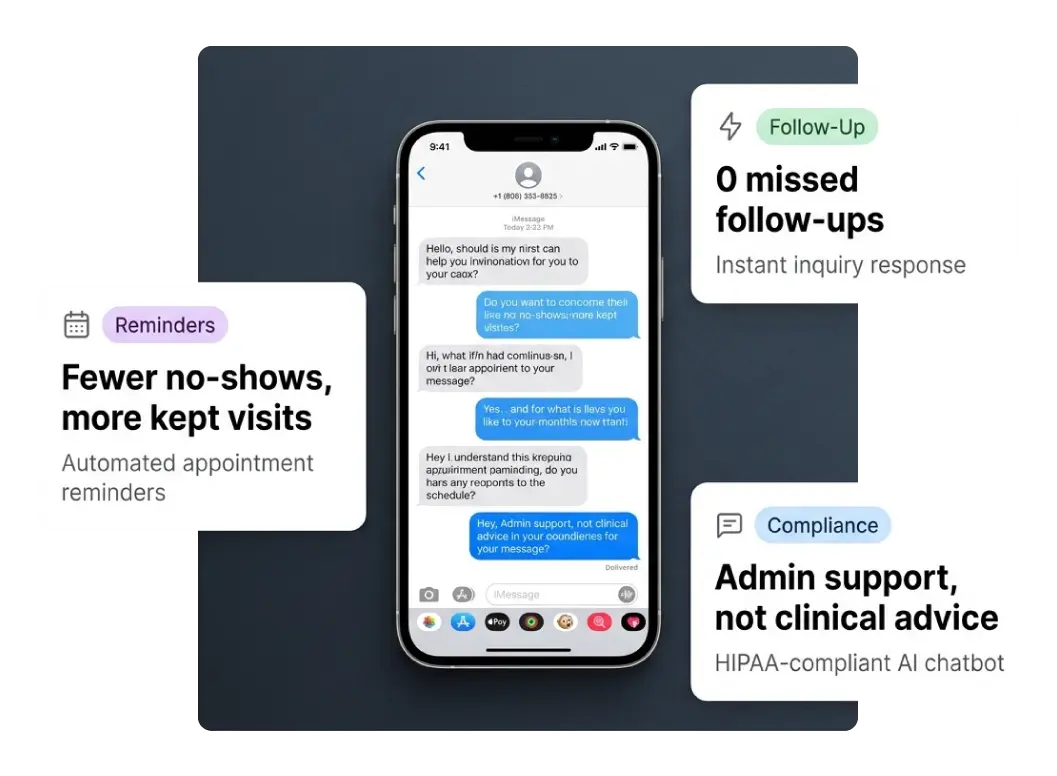
Patients are reaching out, but they’re not always being converted. Inquiries come in, then sit. Follow-ups happen late or not at all. By the time someone gets back to them, they’ve already booked somewhere else.
Appointments get scheduled, but without consistent reminders, no-shows increase. It’s not that patients aren’t interested – they just aren’t being guided through the process consistently.
None of this is intentional. Staff are busy, priorities shift, and there’s no system keeping track of who needs to be contacted and when. Things slip – one missed follow-up at a time.
This isn’t a marketing problem – it’s a follow-through problem. As a healthcare AI automation agency, we build systems that eliminate these gaps so your team can focus on care, not admin.
Key Takeaways:
Get an automation audit and see exactly where patients are dropping off in your process.
We map how patients move through your system, from first inquiry to follow-up, and identify exactly where that process breaks. Most practices don’t have a visibility issue; they have gaps between steps that aren’t being handled consistently.
Patients don’t disappear – they lose momentum when nothing happens next. Here’s where that happens most often:
Someone reaches out, but the response is delayed or missed. Interest fades quickly, and they move on to another provider.
Without reminders or confirmations, scheduled patients forget, reschedule elsewhere, or don't show up.
There's no follow-up, no next step, and no continued engagement, so patients don't return or complete treatment.
When communication drops off over time, patients disengage and fall out of the process entirely.
Each of these points is where potential patients are lost – not because they weren’t interested, but because there was no system to keep them moving forward.
Map your patient flow today, and let’s identify where follow-through is breaking down.

We don’t add more tasks – we replace manual follow-up with a system that runs automatically. Every step that used to depend on someone remembering is triggered based on what the patient does. For rehab patient acquisition and behavioral health intake workflows, this consistency is what turns inquiries into admissions.
Here’s what that looks like in practice:
Nothing depends on memory or availability. This system runs in the background, so every patient gets the same level of follow-through. Consistency is what changes outcomes.
Get an automation audit and see how your current process can be turned into something that actually runs.
Automation is applied selectively. The goal isn't to replace how your team works – it's to remove the repetitive steps that are easy to miss and make sure patients are consistently guided through the process.
That means separating what needs consistency from what requires judgment:
We automate the parts of the patient journey that depend on timing and consistency, like follow-ups after an inquiry, appointment reminders, confirmations, and prompts to schedule or return. These are the moments where delays or missed steps lead to drop-offs, so they’re handled automatically to ensure every patient receives the same level of follow-through. Integrating AI into your medical website creates a seamless experience from first click to booked appointment.
Anything that involves clinical context, sensitive information, or nuanced decision-making stays with your team. Conversations around diagnoses, treatment options, emotional concerns, or complex situations require real interaction, and automation is intentionally kept out of those areas.
Automation supports care – it doesn't replace it.
Contact us to book your discovery call, and let's identify where consistency can be improved without changing how your team delivers care.
We automate the parts of front-desk communication that slow teams down or get missed, without crossing into anything clinical. The goal is to respond quickly, route patients correctly, and keep everything moving without adding pressure on your staff. Every tool we deploy uses HIPAA-compliant medical chatbots and secure CRM and EHR/EMR integrations to ensure patient data is protected at every step. Here’s how that’s handled:
We implement HIPAA-compliant medical chatbots that handle common questions, guide patients to the right service, and help with scheduling. These are strictly limited to administrative support – no medical advice, no clinical responses.
After visits, patients are prompted at the right time to leave feedback. This keeps review flow consistent without relying on manual outreach.
Messages are sent at key moments – after inquiry, before appointments, and after visits – so patients stay informed without staff having to send each one manually. When paired with maximizing paid ad conversions, automated follow-up ensures no lead goes cold.
Every message is triggered based on patient actions and timing, ensuring communication stays relevant, appropriate, and consistent across the entire process.
Responses happen quickly, and nothing gets missed, but everything stays within clear boundaries. Get an automation audit and see how your patient communication can run consistently without increasing workload.
Most practices don’t have a clear view of what happens between inquiry and follow-up. You know how many leads come in, and you know how many patients show up, but everything in between is unclear. That’s where things break.
When tracking is connected properly, and when AI search visibility is layered on top, you get a complete picture of how patients find you and what happens next.
You can’t fix what you can’t see.
Book a consultation and walk through where your patient flow is breaking down and what’s causing it.

Yes, provided they are built correctly. We implement AI automation tools, CRMs (including EHR-connected systems), and HIPAA-compliant medical chatbots that encrypt patient data and sign Business Associate Agreements (BAAs) to ensure full HIPAA compliance while streamlining your front desk. Every message, whether SMS, email, or chat, is handled through systems designed for healthcare with the right safeguards in place.
No. Automation handles repetitive communication, so your team doesn't have to track every follow-up manually. Staff still handle anything that requires judgment, care, or a clinical context. The goal is to free your team for the work that actually requires them.
Routine, time-based communication – like appointment reminders, follow-ups after inquiries, and post-visit check-ins – can be automated effectively. These are the steps most likely to be missed without a system. Automated patient scheduling for urgent care and rehab CRM workflow automation are two of the highest-impact areas.
Yes, automation is built to connect with your scheduling, CRM, and internal workflows. The goal is to support how your practice already operates, not force a new process. Most integrations are completed without disrupting your current setup.
Anything involving clinical decisions, sensitive conversations, or complex patient situations should stay human. Automation is used to support care, not replace it. We define those boundaries clearly during setup so nothing crosses the line.
Patients who inquire aren’t always getting a timely response. Appointments go without reminders. After visits, there’s no consistent follow-up. That’s where bookings are lost.
Book a consultation, and we’ll put a system in place that handles follow-ups, reminders, and patient communication automatically so nothing gets missed again.