
Mental health stigma is decreasing, but competition for behavioral health visibility is growing. Artgro helps behavioral health providers strengthen trust and credibility online.
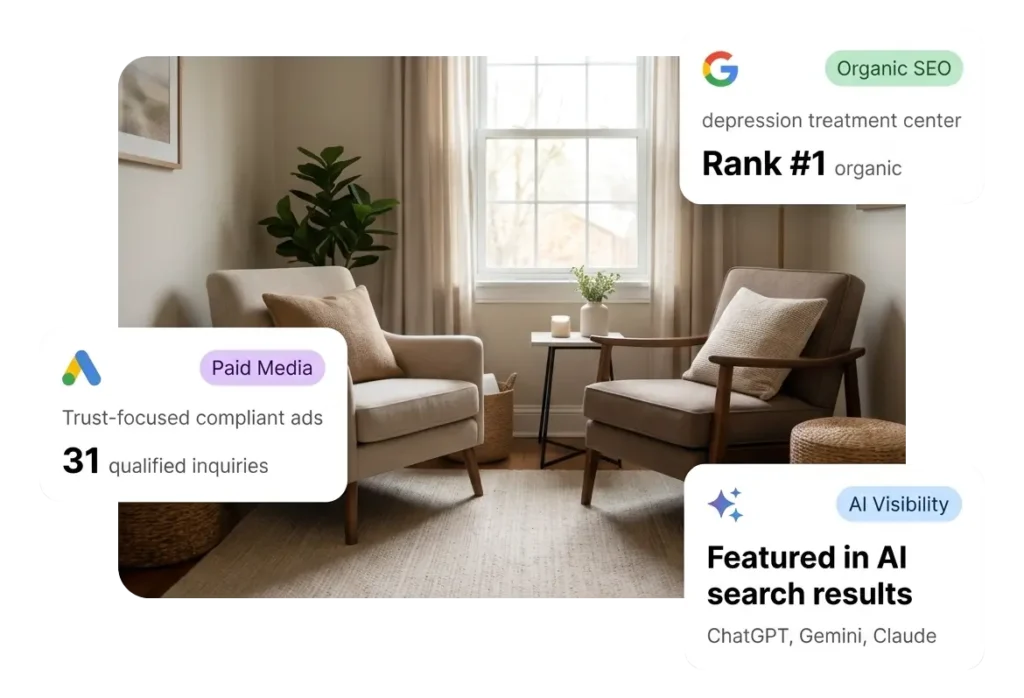
Mental health stigma is decreasing, but competition for behavioral health visibility is growing. Artgro helps behavioral health providers strengthen trust and credibility online.
Behavioral health patients often spend significant time researching symptoms, treatment options, providers, and trust signals before reaching out for support. Unlike many addiction treatment searches, these decisions are frequently more research-driven and less immediate.
Patients may search for:
During this process, patients and families often:
We have to understand that trust heavily influences these decisions. Patients are often evaluating whether an organization feels clinically credible, emotionally safe, educationally trustworthy, and professionally equipped to support their needs.
Strong behavioral health marketing requires understanding the way patients research mental health support online while building visibility around the topics, conditions, and treatment questions they are already searching for. We can help you with that at Artgro.
1 in 5 |
2x |
3 Key Trust Signals |
4 Major Search Categories |
5+ Decision Factors |
1 Stronger Digital Presence |
Mental health awareness has changed significantly over the last several years. More people are actively researching anxiety, depression, trauma, PTSD, OCD, eating disorders, and outpatient mental health support online than ever before.
Several factors continue driving this growth:
At the same time, many behavioral health organizations still struggle with:
This creates a major opportunity for organizations willing to strengthen visibility, educational credibility, and patient trust across modern mental health searches.
Contact us today at Artgro to discuss how your behavioral health organization can strengthen digital visibility and patient engagement in today’s growing mental health landscape. We’ll help you get seen.

Behavioral health content falls under Google’s YMYL (“Your Money or Your Life”) standards, which means expertise, trustworthiness, and clinical credibility can directly influence both visibility and patient trust online. Here’s why E-E-A-T matters in behavioral health marketing:
Patients and search engines both evaluate whether behavioral health organizations demonstrate legitimate clinical knowledge. Clear expertise signals can strengthen credibility across sensitive mental health topics.
Behavioral health patients often research symptoms, diagnoses, and treatment options before reaching out. Educational content needs to feel trustworthy, clinically accurate, and genuinely helpful.
Author bios, licensed professionals, and clear clinical attribution can help reinforce authority across mental health content. Patients often want reassurance that information comes from qualified sources
Behavioral health marketing requires careful, compassionate communication around sensitive topics. Overpromising, fear-based messaging, or misleading claims can damage both trust and credibility.
Patients frequently evaluate professionalism, website quality, accessibility, and overall presentation before contacting a provider. Strong trust signals can influence whether patients feel safe reaching out.
Google heavily scrutinizes mental health and behavioral health content because of its impact on patient well-being. Organizations with stronger expertise, authority, and trust signals are often better positioned for long-term visibility.
Today, request a free marketing audit from Artgro to discuss how your behavioral health organization can strengthen clinical credibility, educational authority, and patient trust online.
Behavioral health marketing requires more than traffic alone. We have to understand that patients often spend significant time evaluating trust, educational credibility, provider expertise, and treatment fit before reaching out for support.
Artgro helps behavioral health organizations strengthen visibility, patient trust, educational authority, and long-term digital credibility across competitive mental health searches.
Patients searching for anxiety treatment, depression support, trauma programs, PTSD care, and outpatient mental health services often begin with educational research. Strong SEO visibility can help behavioral health organizations appear throughout those trust-driven search journeys.
Many behavioral health searches include local intent, especially for outpatient care, PHP/IOP programs, therapy services, and residential treatment. Local visibility can influence which organizations patients and families contact first.
Behavioral health advertising requires careful messaging, clinically credible positioning, and trust-sensitive communication. Paid campaigns should support visibility while maintaining professionalism and healthcare compliance awareness.
Reviews, testimonials, provider credibility, and patient trust signals can heavily influence behavioral health inquiries. Patients often evaluate professionalism, safety, and overall reputation before reaching out.
Behavioral health websites often serve as the first impression for vulnerable patients and families researching treatment options. A strong website presentation can support trust, educational accessibility, and provider credibility.
Behavioral health organizations often manage high inquiry volumes across multiple services and levels of care. AI automation can help support responsiveness, inquiry organization, and patient communication workflows.
Today, you can explore Artgro’s behavioral health marketing services to learn more about strengthening long-term visibility across behavioral health searches.

Many behavioral health organizations also support individuals experiencing co-occurring substance use disorders alongside mental health conditions such as anxiety, depression, PTSD, trauma, or OCD.
While these services often overlap clinically, behavioral health marketing focuses on the broader mental health treatment landscape rather than the rehab, detox, sober living, and recovery-focused ecosystem commonly associated with addiction treatment marketing.
For organizations focused specifically on substance use disorder treatment and rehab admissions growth, you can explore our Addiction Treatment Marketing Services.
Behavioral health marketing is heavily trust-driven and education-focused. Patients often spend significant time researching symptoms, treatment options, provider credibility, and mental health resources before reaching out for support.
Behavioral health content falls under Google’s YMYL standards, which means expertise, authority, and trustworthiness can directly impact visibility and patient trust. Clinically credible educational content is especially important in mental health search environments.
Many patients begin with symptom-related or condition-specific searches such as anxiety treatment, depression support, PTSD therapy, trauma programs, OCD treatment, or outpatient mental health services. These searches are often research-driven and trust-sensitive.
Behavioral health marketing focuses on the broader mental health landscape, including depression, anxiety, trauma, PTSD, eating disorders, and co-occurring conditions. Addiction treatment marketing focuses more specifically on substance use disorder treatment, detox, rehab, and recovery-related services.
Patients and families often evaluate whether an organization feels clinically credible, emotionally safe, and professionally trustworthy before reaching out. Website quality, educational content, reviews, and provider credibility can heavily influence those decisions.
Patients researching mental health treatment often evaluate credibility, educational authority, and trust before reaching out for support. Artgro helps behavioral health providers strengthen visibility, clinical credibility, and long-term patient acquisition across competitive mental health searches. Contact us to discuss your organization’s visibility and marketing goals.